Suit
A charity shop story

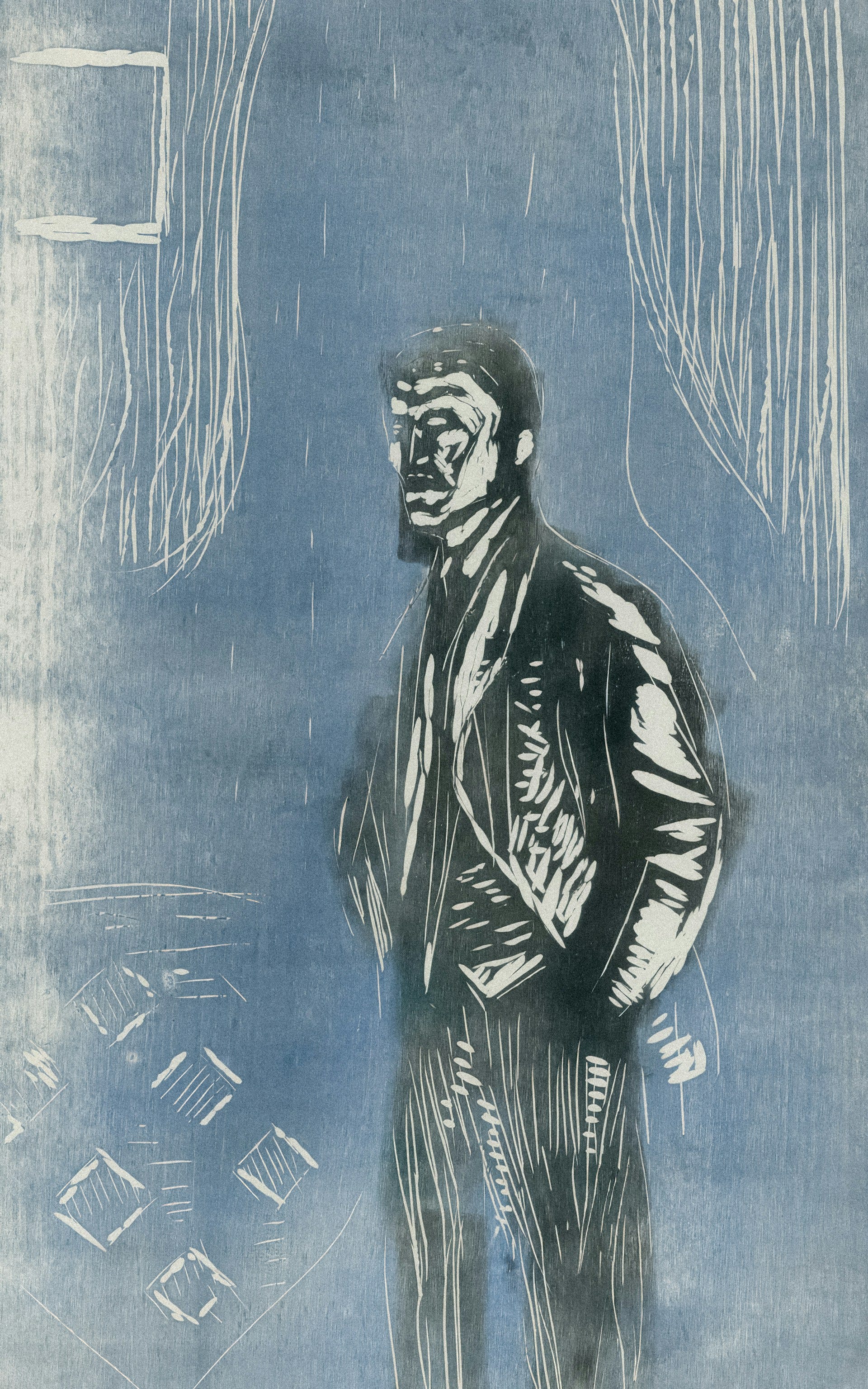
Jason had been sleeping rough for a couple of weeks - a comparatively short time, which already felt like aeons. Not only was it a struggle, but it was so boring. He spent hours sitting on the pavement, waiting. Waiting for something to happen, some twist of fate. Waiting for a stranger to walk past and, hopefully, blessed be, please let them drop some change into his cup. Or even better, stop for a chat, casual, like they would with anyone else. Not everyone could give him money, he understood that, but being ignored was dehumanising. Everyone wished homelessness didn’t exist. Before now, he presumed that meant people wanted to fix it, but from this side, it felt more like they wished he would simply disappear.
He’d once been down to London for a weekend, the only time he’d visited the capital. As he nervously inspected the tube map, careful not to miss his stop, a dishevelled man walked onto the carriage, trademark white coffee cup aloft. He stood in the middle of the aisle and made a loud plea for help, told some sob story nobody believed, then approached each person in turn asking for money. Jason watched in disbelief as the man made his way down the carriage, leaning toward each passenger, without a single one reacting. Their eyes didn’t leave the newspaper in their lap, their conversations didn’t break for a moment, some of them continued gazing out the window, as if looking right through him. The man was a ghost. As he approached the end of the carriage, Jason stared at his shoes. Ordinarily, he would chuck 50p into the cup and wish him all the best, but that was clearly not the done thing. He bowed to the social example set for him, and even as it happened, his stomach churned with guilt. The man left graciously, without an angry word at his treatment, and the carriage let out a collective sigh. Passengers exchanged glances, something otherwise unheard of on the tube, and grimaced at each other, or raised their eyebrows knowingly, then everything fell back into place. Now, on the other side of such exchanges, feeling like a ghost was unbearable. A kind smile and apology were far preferable. He’d heard a story about a paranoid schizophrenic who had come to believe that he actually was a ghost, because people ignored him so often. When someone did acknowledge him, he became afraid of them, because they could see ghosts. This probably wasn’t true. Every community has its folktales.
But the longer he lived on the streets, the more real the story became. Some people looked uncomfortable when they passed him, gave him a half glance when he spoke, before realising what he was and looking away. At least they’d noticed him, verified his impact on the world around him. Most people didn’t break their stride, didn’t flicker when he spoke. Their faces remained set and impenetrable. After a string of these, he could feel himself fading away, becoming the ghost of folklore. Invisible to the world around him. A glimmer in space-time, which people skirted around without realising. He’d look at his hand to make sure it wasn’t fading out of sight, slap himself on the leg to check it was still firm and present. When he slapped himself, people looked, their faces a mix of horror and amusement, and their looks brought him back to reality. His body firmed up and became opaque again. He understood why some of his brethren acted erratically or shouted. They needed to draw attention, to stop themselves slipping from existence.
Jason did actually have some money in his bank account, so felt a pang of guilt when he asked for change, like he was an imposter, with his secret hoards. He had almost forty quid saved up, and when he really needed to, could covertly buy himself some food, anxious someone would see him using a debit card and accuse him of being a liar and a fake. That was all his money, though, and money soon runs out.
He had sofa surfed for a while, but the good will of his former friends was a tealight - flickering and short-lived. Shelters scared him; they had a reputation for being dangerous, and barely warmer than the streets unless there was ice on the ground. He’d tried to go once and found himself turned away, the queue far outnumbering the beds. As he’d reached the front, people started pushing and arguing, trying to seize the final spots. Jason stood back, still harbouring a long-nurtured fear of the homeless, not yet ready to accept himself among their ranks or consider them as opaque as himself. A hotel room would wipe out most of his cash, which wasn’t worth one night of luxury, so he sat on his nest egg and slept on the streets until something worth spending it on came along.
Which had, in fact, just happened. He had a job interview, his first in a long time. It was an entry level position, working in a mailroom (who knew they still existed, in the world of email?). Public service jobs wouldn’t consider him because he looked scruffy and smelled bad. In public service, appearance is king. No one wants a customer’s first impression on entering their establishment to be that they employ the homeless. Much better for their staff to look like they’ve thrown a lot of money at pretending to be homeless. Artfully scruffy hair and beard, expensively torn clothes. He had higher hopes for a job tucked away where even the other staff wouldn’t need to look at him. Despite that, he worried that his dirty, ripped clothes would exclude him, which brought him to the charity shop.
He sloped inside, guard up. Usually, upon entering shops, he garnered at best hard stares from employees, at worst, immediate removal. Here, the teenager behind the counter paid him virtually no mind. Eyes flicked up for a moment, but reacted no differently than if anyone had walked in. This could be because volunteers aren’t paid to make their life difficult, or it could be the nature of a charity shop to accept everyone through its doors.
Jason shuffled to the back, where he knew the men’s clothes were, throwing a longing glance at the bookshelves. He used to love reading. Curled up in his childhood bed with a comic was the last time he felt true peace. But that wasn’t why he was there. The precise figure in his bank account, down to the penny, was etched into his psyche; he knew exactly how many emergency meals it could buy.
He flicked through racks of old clothes, looking for something smart enough for an interview. At one end, presumably a recent donation, was a full black suit, complete with white shirt. He pulled it out to inspect. The fit looked promising. Sure, it was a little beaten up, but honestly in decent nick. As he pulled it closer to look at the tag, the smell of smoke hit him. Pipe smoke, he would say, not cigarette smoke. He’d spent enough time hanging around working men’s pubs in his youth to become attuned to the differences. Another happier time, another distant past. The suit was perfect, which was lucky, because it was the only charity shop in town, his only hope of making a good first impression.
He nervously flipped over the cardboard tag and took in the price. Lower than he had expected. His stomach soared into his chest with excitement. He could afford the suit. He could afford the suit and a celebratory Greggs. He felt his body become firmer and more present with each step he took towards the counter. This suit could be what tied him to the mortal plane and saved him from fading into ghostliness.
Part of my Charity Shop Anthology